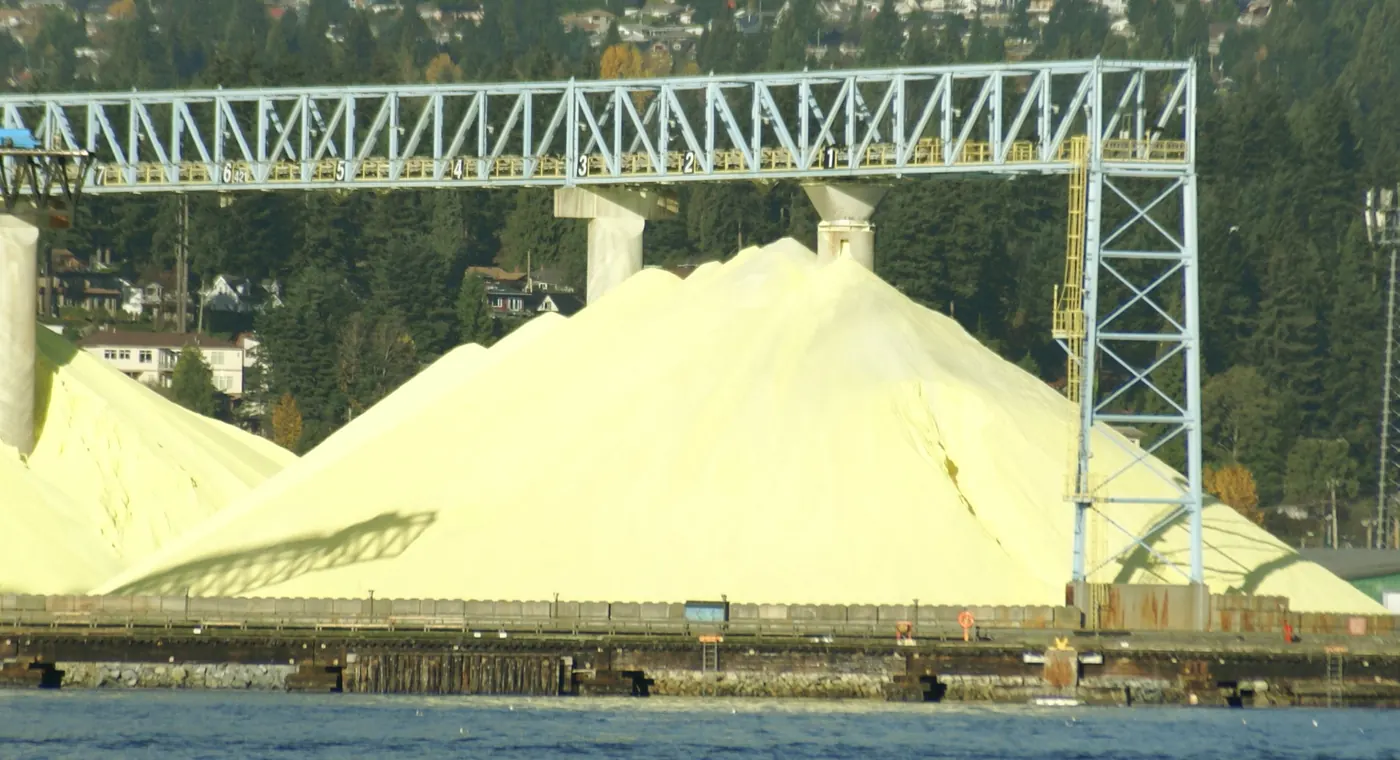
The global sulfur market is currently facing its most severe price and supply shock in history. As of March 25, 2026, the effective closure of the Strait of Hormuz due to military escalations has paralyzed nearly 25% of total global production.
What was once a steady industrial commodity has now become a critical bottleneck for both the green energy transition and global food security.
Market breakdown: record highs
- Price Surge: China sulfur futures hit a historic 5,183.33 CNY/t, a 112% increase year-over-year.
- Global Deficit: Spot offers in Africa and Southeast Asia are reaching as high as $700/t CFR.
- Panic Buying: Prices have decoupled from traditional energy trends as the battery-metal sector competes for dwindling cargo.
The logistics crisis
- Stranded Supply: Approximately 44-46% of the world’s seaborne sulfur is produced in the Persian Gulf and is currently unable to reach international markets.
- Insurance Spikes: Most of the global fleet is avoiding the region as insurance premiums skyrocket to 10% of vessel value.
Industry and food security impact
- Electric Vehicles: Indonesia, producing over 50% of the world's nickel, is in a critical state with some plants holding only one month of inventory remaining.
- Fertilizers: OCP Group in Morocco, the world’s largest importer, faces a "cascading" shutdown of phosphate exports without its annual 3.7 million tons of Gulf sulfur.
- Agriculture: The spring planting season in the US and Europe is now facing a secondary "nutrient gap" for 2026 crops.
The bottom line
We are witnessing a "pre-logistical" crisis where a single geopolitical choke point threatens to halt nickel refining and global fertilizer production simultaneously.
First published on LinkedIn. Prices are the market assessments of the week they were written, not a current offer.View on LinkedIn →