A number of global sulphur benchmarks declined as markets adjusted to subdued demand from China and Indonesia, where buyers have already covered their June and July requirements. This has been reflected in this week’s lower price assessments in the Middle East, Canada, and China.
Activity in China's sulphur market has slowed down both domestically and internationally, largely due to lower-than-expected phosphate export quotas. As a result, demand has weakened, leading to reduced trading activity overall.
Domestic sulphur prices continued to decline this week, falling to RMB2,280-2,300/t FCA ($317-320/t), which equates to approximately $274/t CFR. International prices also dropped, with the latest purchase of Canadian material occurring below $300/t CFR, bringing the international market down to $295-299/t CFR.
Activity in Indonesia was muted, with no purchases reported. As a result, the price was assessed unchanged this week although bearish sentiment is emerging with most buyers in the country having covered their June and July requirements. Still, QMB is understood to be looking for volumes with market members expectant of what could be a newer price signal.
This month’s imports fell by around 68% compared to last month.
In the Middle East the price range narrowed as prices higher than $295/t FOB are no longer considered viable due to the muted demand in China and unchanging prices in Indonesia.
The price is considered stable in the short term by market participants who consider that Indonesia is likely to sustain this price level. Still, others consider that with the market currently headed into a period of limited activity throughout June and July, prices could soon show signs of decreasing.
Following last week’s announcement of QatarEnergy’s June QSP at $286/t FOB, KPC set its June KSP at $287/t FOB, while Adnoc posted its June OSP at $290/t FOB.
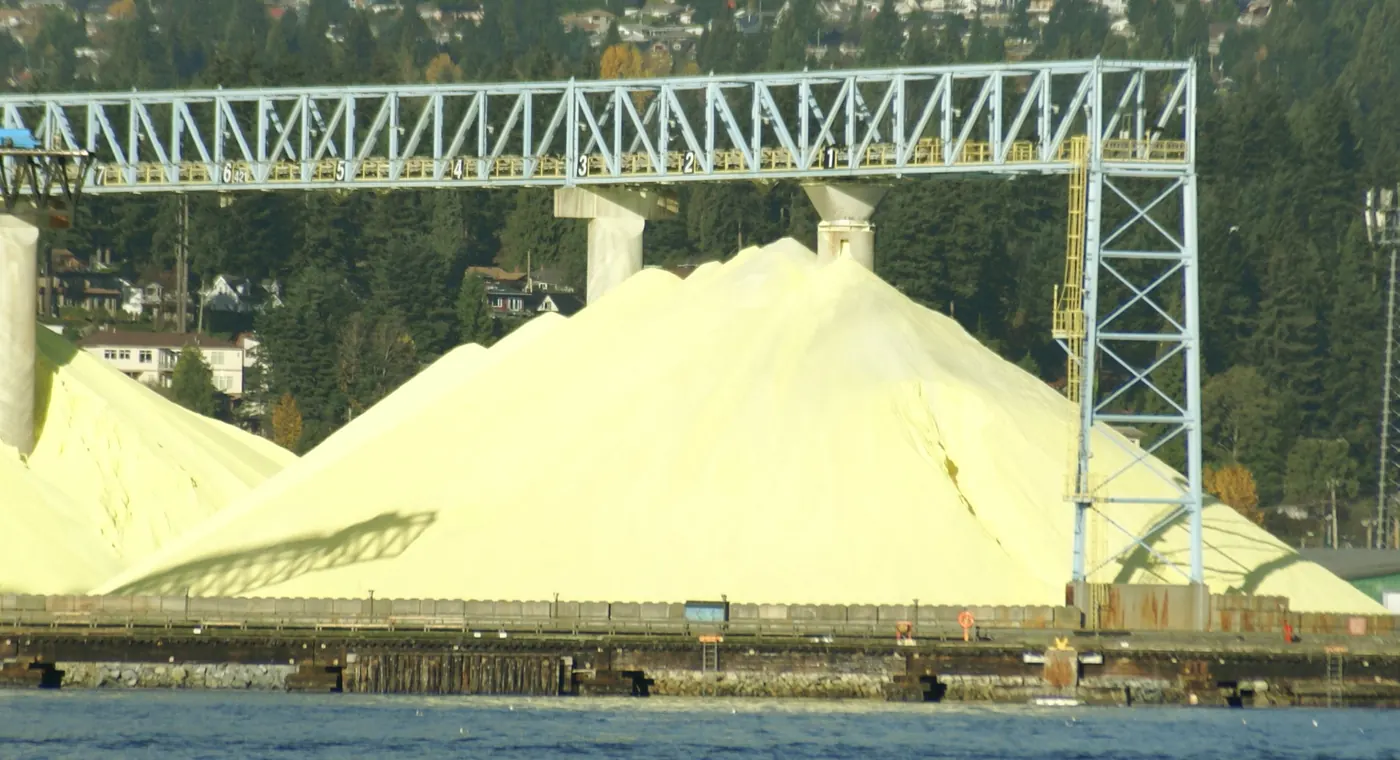
In Vancouver, sulphur prices declined following the latest sale into China. Since the start of the year, Canada has been a key supplier to meet Chinese demand. Still, as demand in China has softened, Canadian export activity has slowed. The most recent transaction into China reflected a price drop in Vancouver, bringing it firmly into the $270s/t FOB range.
Despite this, with domestic Chinese prices where they are, it remains uncertain whether the current price spread between domestic and international markets can be maintained or will need to narrow to encourage further imports.
In Brazil, the price range widened slightly to $290-300/t CFR from its previous level of $290-299/t CFR as a result of the latest purchases in the South American country. The market has seen activity with purchases of both FSU and US Gulf material. Still, the market is likely to enter a period of limited activity, according to market participants.