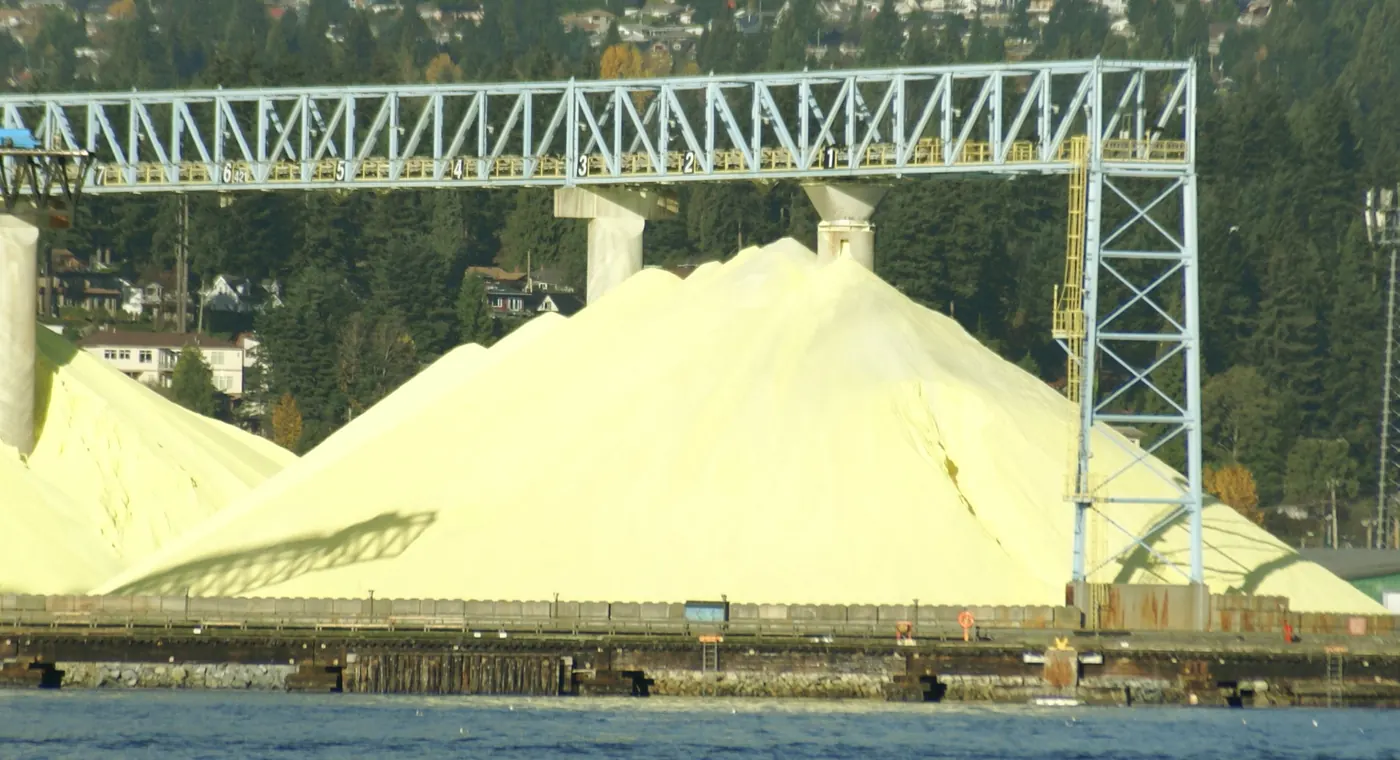
Not a single non-Iranian sulphur vessel has left the Strait of Hormuz since July 18th. That’s twelve days now.
It’s not really a statistic it’s a snapshot of gridlock. Shipowners aren’t sending vessels because war-risk insurance has made it pointless, even though there’s no official closure order. It’s just a standoff nobody wants to test. Back in April, over 600,000 tonnes of sulphur sat stranded on vessels that couldn’t unload in the Persian Gulf, and that picture still largely holds.
There was an odd twist this week too: Russia lifted its ban on Kazakh sulphur moving through its railways. Sounds like good news, except Kazakhstan’s ban on exports outside Russia is still in place so nothing actually changed on the ground. The market got briefly hopeful, then landed right back where it started.
In Canada, wildfires choked the rail lines into Vancouver for weeks and are only now easing, but port inventories have already taken the hit. In the Red Sea, Houthi attacks on Saudi refineries added fresh risk premium satellite images allegedly show fires at two Aramco facilities, though nothing’s been confirmed yet.
Prices haven’t moved through any of this Middle East fob sits at $850-900/t, granular cfr China at $1,000-1,100/t, unchanged week on week. But that’s not calm. It’s just nobody willing to make the first move.
The bigger story, I think, is shifting from fertilizer into chemicals. In Zhejiang, titanium dioxide and caprolactam producers have halted output for lack of feedstock. Morocco’s OCP is running at half capacity. India just imposed a six-month export ban. Sulphur mostly isn’t mined it’s a byproduct of natural gas and oil refining, which means there’s no quick fix when supply tightens.