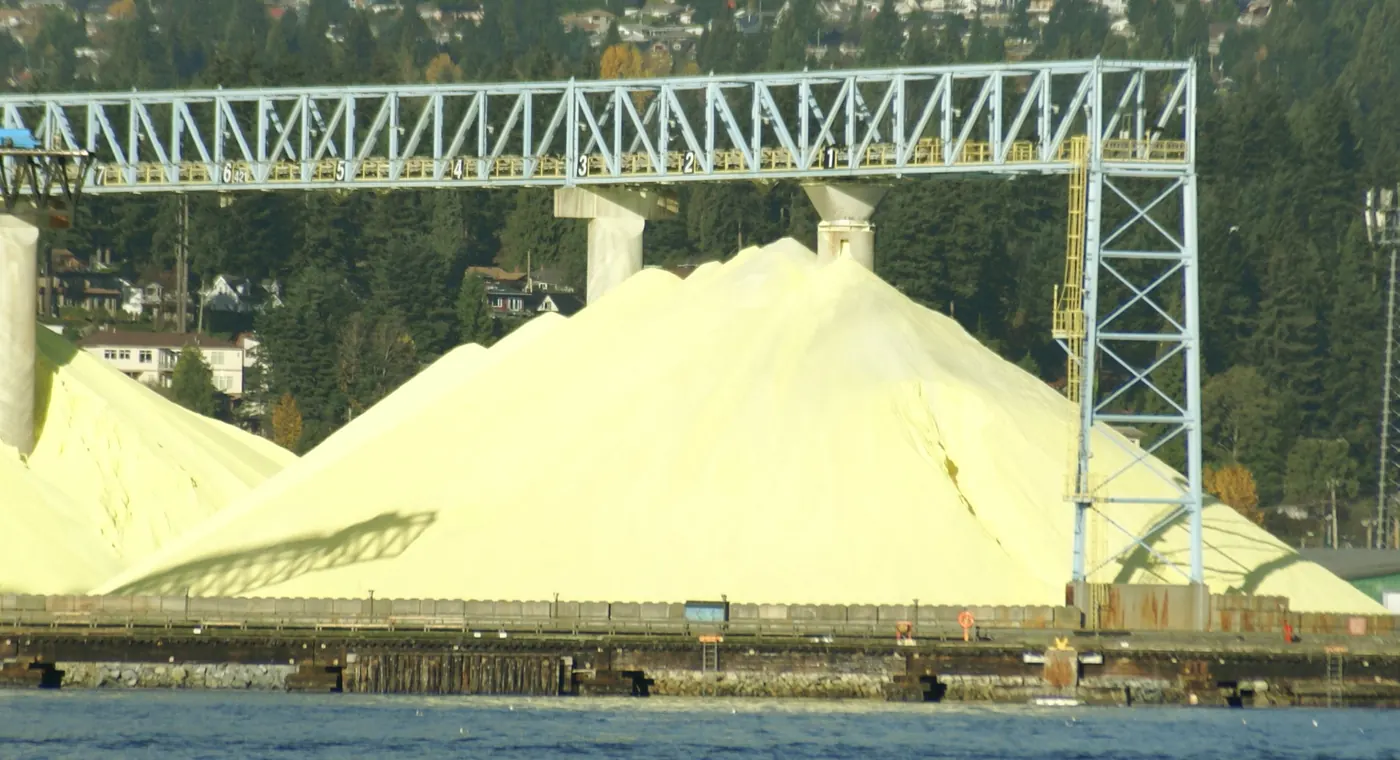
The logjam in the Strait of Hormuz has snapped the global sulphur supply chain right down the middle. The brief respite seen in late May and June, when 900.000 metric tons of sulphur loaded from Middle Eastern ports hit the market, has evaporated entirely as regional ceasefire talks stalled and military activity flared back up.
Vessels are currently blocked from approaching loading berths. This gridlock has propelled third-quarter contract negotiations and spot market expectations to levels buyers had not even begun to anticipate.
Sharp Price Surges and Market Deadlock While Middle East FOB (excluding Iran) prices appear nominally flat, averaging $945 per metric ton (within a $890 - $1,000 band), this stability is deceptive. When you consider that prices climbed to this point from $752 in April and $868 in May, it becomes clear just how tight a tightrope the market is walking. China CFR granule prices have settled into a $1,000 - $1,100 range, but traders have begun pulling offers off the table because they cannot calculate the geopolitical risk insurance. Meanwhile, the Chinese domestic market factored in delivery delays, surging by RMB 250 per ton in a single week to hit RMB 8,900.
The most dramatic blow landed on European contracts. Third-quarter liquid sulphur contracts closed with an unprecedented increase of $325 per ton. Benelux deliveries were locked in at $840 - $856 CFR, while Northwest Europe settled at $882 - $899 CPT. If refineries cannot pass these costs down to sulphuric acid and fertilizer prices, production cuts will become inevitable.
Regional Fractures and the Inventory Crisis Sulphur inventories at Chinese ports have quite literally melted away. Total port stocks, which stood at 2.72 million tons in 2024 and 2.32 million tons in 2025, plummeted to 737,000 tons as of July 3, 2026. Consumers are operating on near-zero inventories. Giants like Sinopec have completely sacrificed exports to safeguard domestic phosphate fertilizer producers, and a major refinery in North China has not opened a single sales tender for eight consecutive weeks.
In Sub-Saharan Africa, the situation has devolved into a total supply shock. Sulphur imports for the first five months of the year crashed by 68% to 56,300 tons as Middle Eastern cargoes ground to a sudden halt. Mining companies in the Copperbelt were forced to secure tonnage from Vancouver and the US Gulf at exorbitant premiums just to keep operations running. This scramble pushed truck freight rates between Richards Bay port and the DRC up to $600 per ton, forcing local chemical producers to scale back capacity.
👇🏻👇🏻👇🏻