Delivered sulphur prices in Asia fell this week as demand in China has softened while the latest sales into Indonesia were also priced below last week’s assessment. While most other benchmarks remained steady, a subtle bearish tone is beginning to emerge.
Sulphur market activity in China has softened both for domestic and import business, impacted by lower phosphate export quotas compared with last year. Domestic sulphur prices have fallen to RMB 2,470-2,480/t ($344-345/t) FCA, equivalent to around $296/t CFR.
Meanwhile, international import offers remain above $300/t CFR, creating a price gap that limits Chinese buyers’ incentive to source from abroad. Consequently, no new sulphur import transactions were reported this week.
Indonesia did commit to purchasing material this week, but at reduced price levels. Around two weeks ago, prices briefly reached approximately $310-315/t CFR on transactions, but this was followed by a stretch of limited market activity. This week’s price decline reflects subdued demand within Indonesia, which is adjusting to similarly weak demand in China.
Since the start of the year, the Middle East has played a crucial role in supplying Asian demand. While prices remained steady this week, a slight bearish tone has begun to surface.
Last week’s QatarEnergy tender was reported awarded around $300/t FOB by market participants, but the June Qatar Sulphur Price (QSP) has been set at $286/t FOB, a mere $1/t increase from May. Although Adnoc and KPC have yet to announce their monthly prices, subdued demand in Asia is likely to limit any price gains in the region, resulting in short-term price stabilisation.
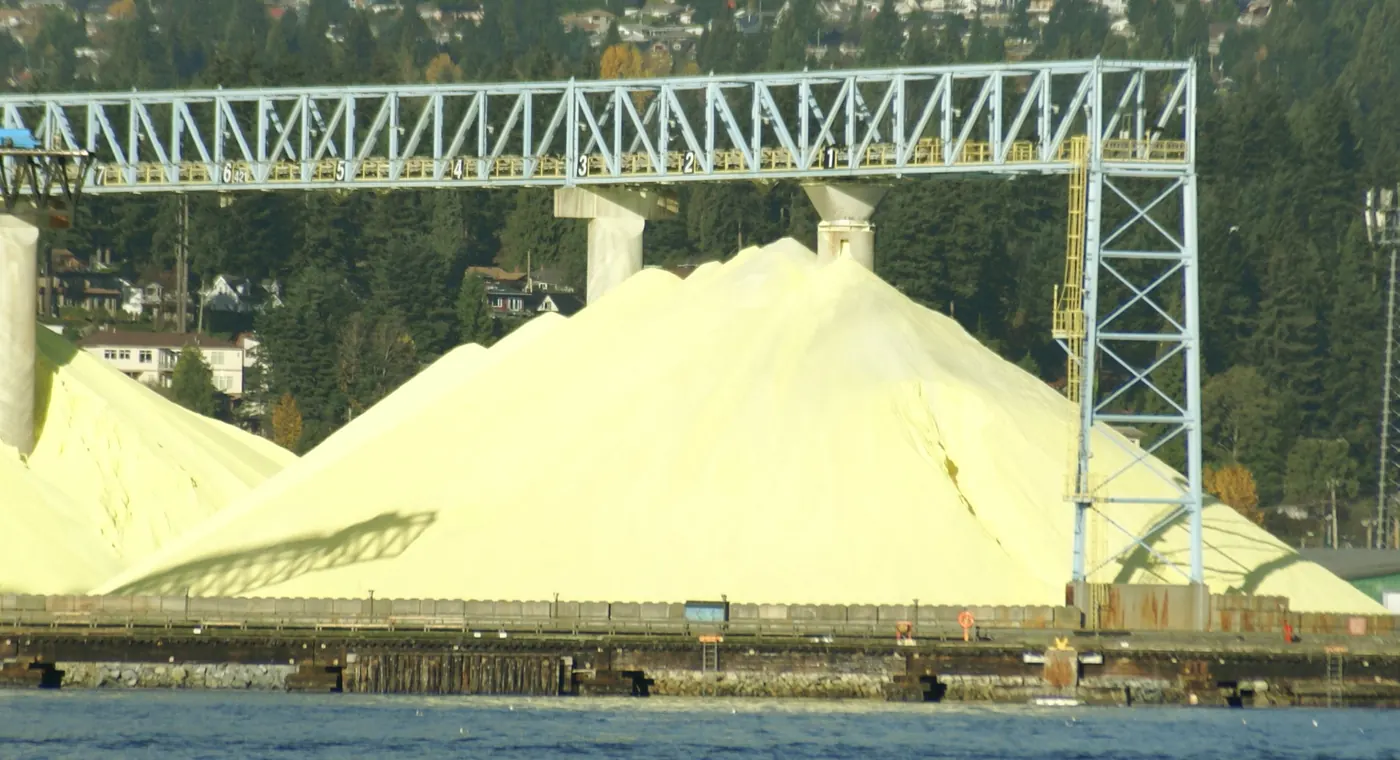
Vancouver export prices remained unchanged amid limited market activity. Although the region has played a significant role in supplying Asian demand, activity has slowed over the past two weeks. This is driven mainly by the reduced demand from China. Prices have stabilised, holding steady for the third consecutive week.
The Mediterranean market remained steady on both FOB and CFR terms. Still, what had been healthy demand was rapidly met through several recent tender sales, quietening the bulls in the market. A clearer price trend is expected to develop next week, once the market absorbs the impact of four tenders over the past two weeks.
In Brazil, prices were assessed unchanged following last week’s increase driven by the award of a Galvani/Itafos tender. With market activity limited, attention has shifted to scheduled maintenance at the port of Santos, which is expected to constrain import volumes.
Nevertheless, the region has experienced subdued activity recently, and demand is likely to remain muted in the near-term, stabilising prices at their current level.