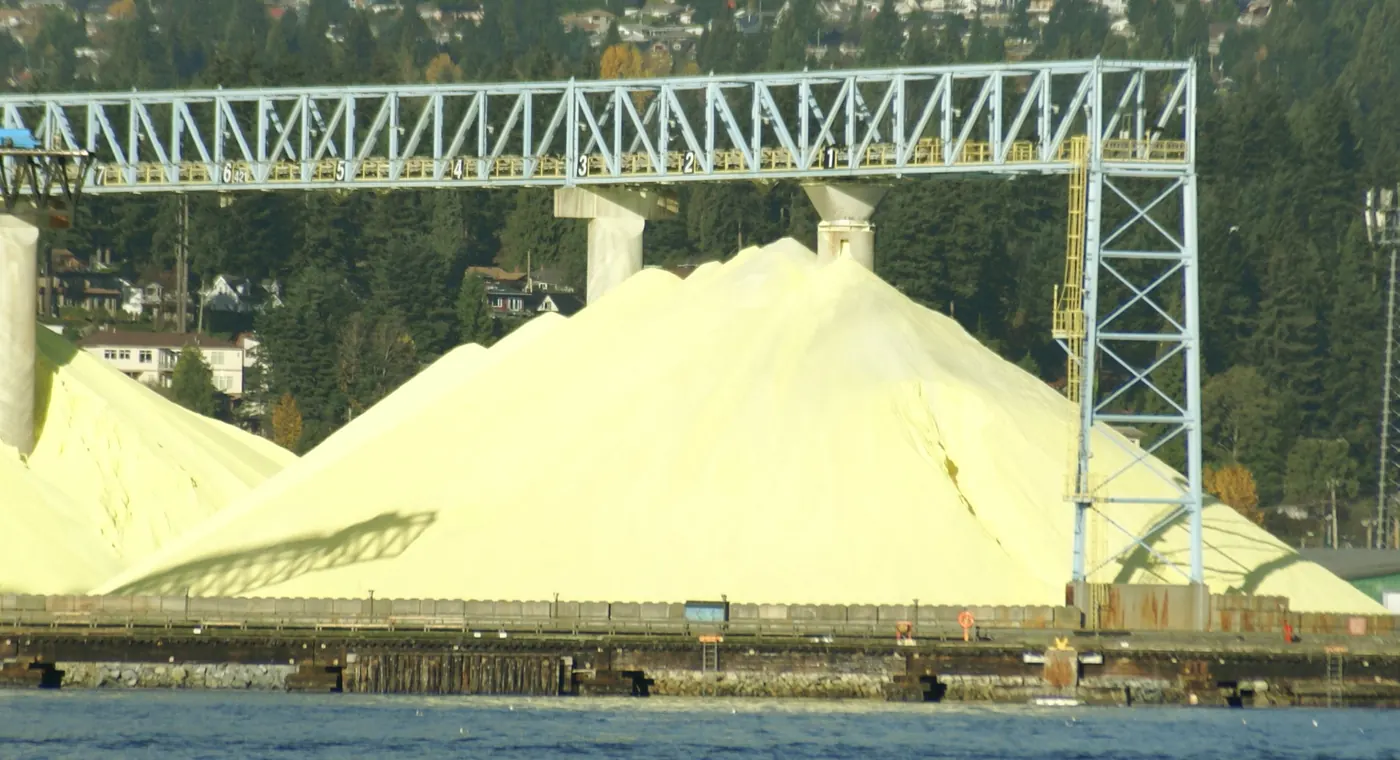
Sulphur benchmarks leaned to the upside, with prices holding near their highest levels since July 2022. Middle East November monthly postings and Russia’s temporary export ban dominated market chatter in an otherwise quiet week.
Following last week’s settlement by QatarEnergy, the UAE’s ADNOC and Kuwait’s KPC also raised their official monthly postings, taking November prices to $400-415/t FOB, up from $324-325/t FOB in October. This lent support to the Middle East, with spot assessments at $400-415/t FOB.
Following consecutive weekly increases, sulphur markets in China and Indonesia saw limited demand, with no firm transactions reported. Even so, talk in China pointed to levels as high as $450/t CFR, while offers in Indonesia were heard around $440/t CFR.
India’s sulphur market has shifted higher, clearing $450/t CFR as tightening availability and steady fertiliser pull firm the floor. Rising domestic and lump prices, squeezed burner economics, partly offset by steam credits, and heavy reliance on Middle East supply keep the risk skewed to the upside.
In the Mediterranean, scarce supply and ongoing demand have lifted prices, with FOB around $400-410/t and CFR $410-425/t. Sentiment stayed firm, and participants expect fresh deals to conclude higher.
The long-expected temporary export restrictions from Russia were released on 1 November, with a ban on exports of technical sulphur used in fertilizer production through year-end to ensure domestic supply. Russian sulphur exports had already fallen sharply, from around 400,000 t per month to about 100,000 t in October, after early-September drone strikes on the Astrakhan and Orenburg natural gas plants. Market discussion is centred on whether Kazakh material can still be exported via Ust‑Luga. The prevailing view is that exports will be allowed, but the market is waiting for a test cargo to confirm.
Short-term outlook CRU’s latest short-term forecast projects global sulphur prices climbing into a likely January peak, followed by a gradual easing.