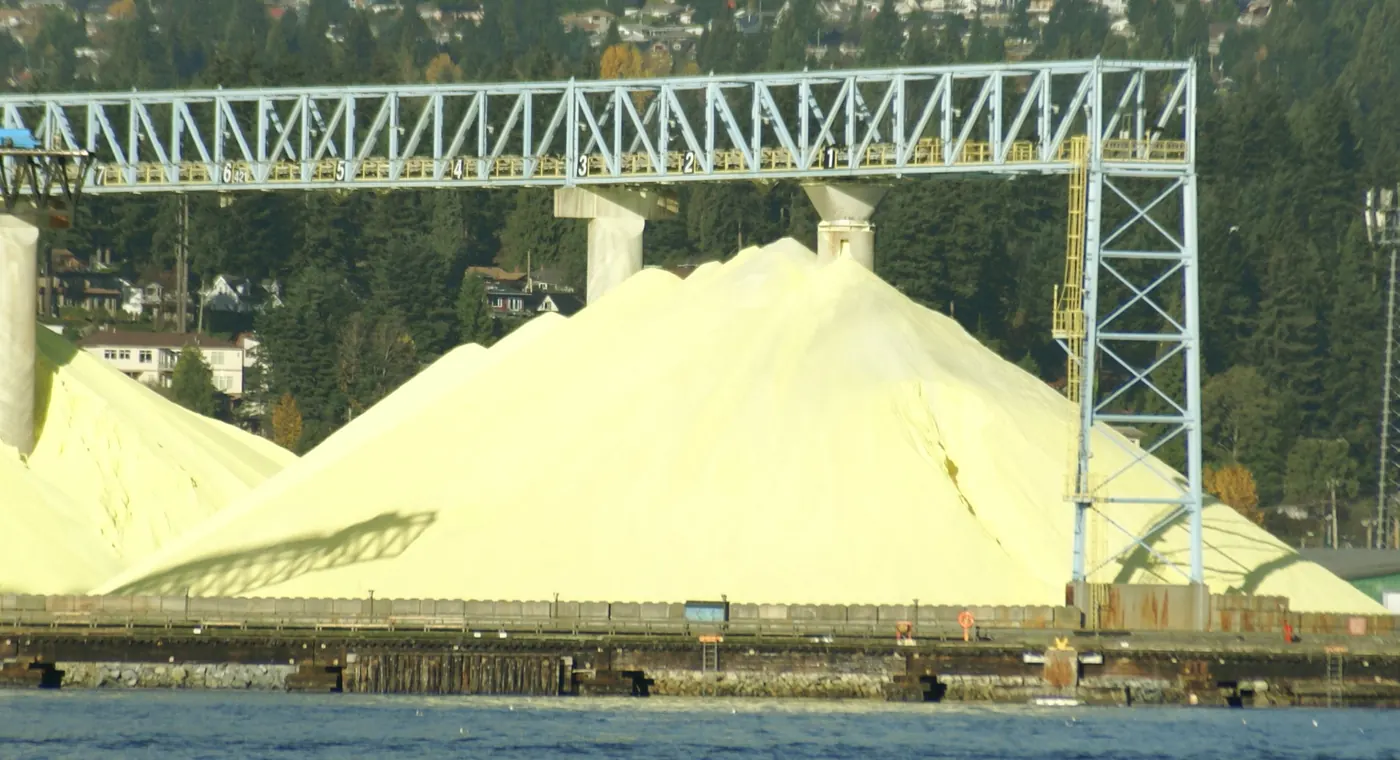
The sulphur market is sending a clear message right now: demand is driving this, not supply.
Two major producing nations have had export restrictions in place for months. On paper, that's a meaningful reduction in global availability. Prices should be holding. Instead, we're watching a broad correction across nearly every trade route.
China is the story.
Ex-works Chinese prices fell from 6,800–7,000 CNY/MT to 5,400–5,550 — roughly 20% in a matter of weeks. CFR China dropped from $860–880/MT to $800–850. The country that was absorbing supply aggressively earlier this year has stepped back. When China steps back, every other market feels it.
The exceptions are telling. India is holding firm at $880–894 CFR. Brazil spot is steady. Middle East FOB barely moved. These are markets with real offtake needs and committed relationships. The correction is hitting opportunistic demand the hardest.
Three things I'm watching:
The Q4 contract premium is significant. Brazil booked above $1,035/MT for Q4 — that's $135+ over today's spot. Buyers who contracted when the market looked different are sitting on that spread. Someone will absorb it.
Middle East netback has shifted. At $694–749 on a 30–35kt basis, sellers are recalibrating. Not a stress number yet, but it's moving toward a range that tests supply economics before year-end.
The structural picture hasn't changed. Supply is still tight by historical standards. But a market doesn't need surplus to fall — it only needs the most price-sensitive buyer to pause.
China paused.
The real question now is whether this correction finds a floor before Q4 fertilizer and industrial demand builds momentum, or whether we drift lower and reset expectations for 2027.
Brazil and India will show us first.