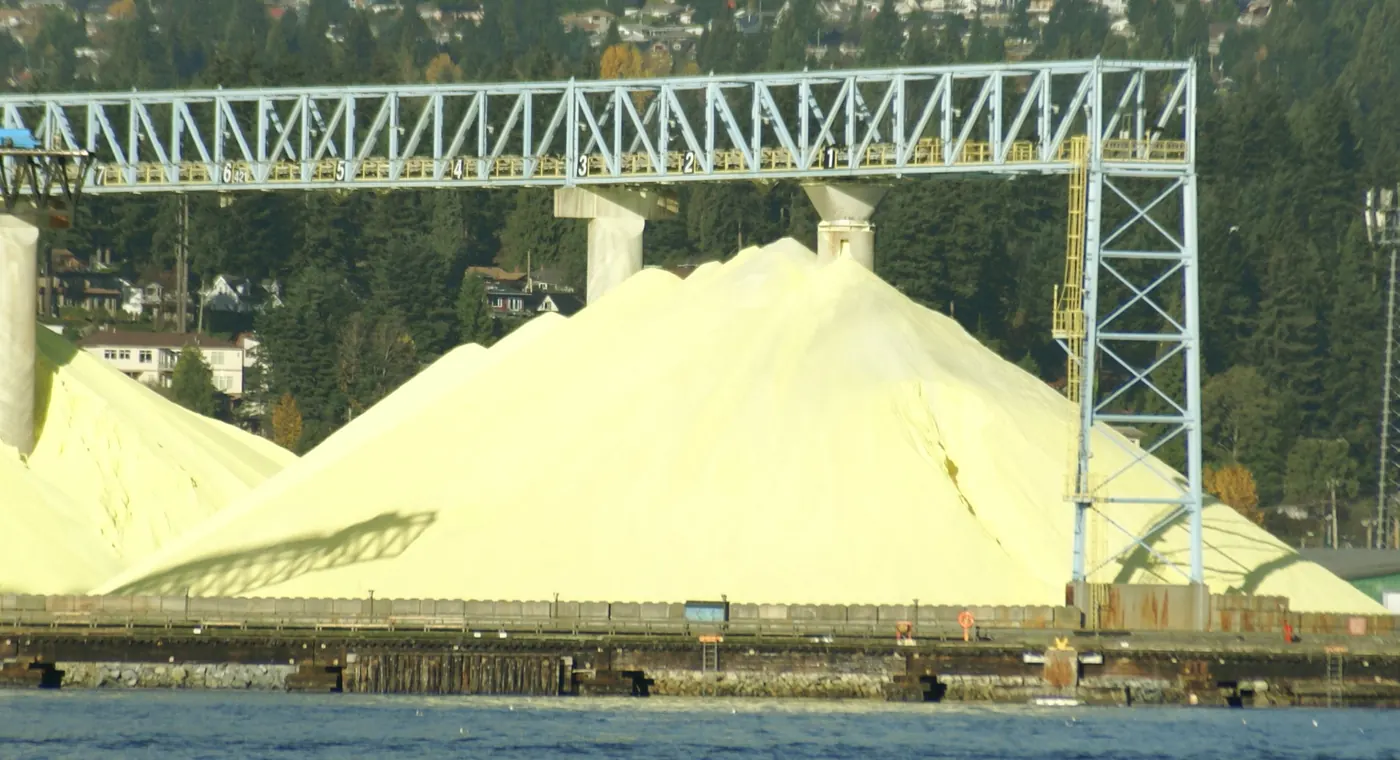
Global sulphur prices have been on a sustained downward trend since late summer, and that decline has only deepened in recent weeks — broadly based across regions rather than confined to one trade lane.
Fertiliser demand remains the binding constraint. Run rates at the major importers — Indonesia and China in particular — are still low, and with Chinese domestic sulphur pricing sitting well below import parity, Chinese buyers have little incentive to compete for cargoes. A discounted spot sale into Indonesia from a Pacific origin has reset buyer price expectations across the region and pulled offers lower in response. On the supply side, Moroccan output has been ramping up even as several producers trim offers to place available spot tonnes before year-end — adding further pressure from the sell side.
Regionally, the Middle East and Black Sea origins have seen the sharper pullbacks, while North African cfr levels have held up comparatively better. US Gulf and Pacific coast origins have also moved down in step with the broader market. One factor worth flagging separately: reported conflict-related disruption at a Baltic loading port has introduced some uncertainty into that corridor's near-term availability — a dynamic to watch rather than a price driver for now.
Absent a genuine recovery in downstream fertiliser and industrial demand, the prevailing view across the trade is that prices have further room to soften before stabilising. We'd treat any near-term bounce as sentiment-driven rather than fundamentals-driven until run rates actually move.
Our take: in a market like this, the risk shifts from price to counterparty — sellers cutting price to move volume, buyers chasing the bottom. Structure (payment instrument, documentation, verified counterparties) matters more in a soft market than in a tight one, not less.