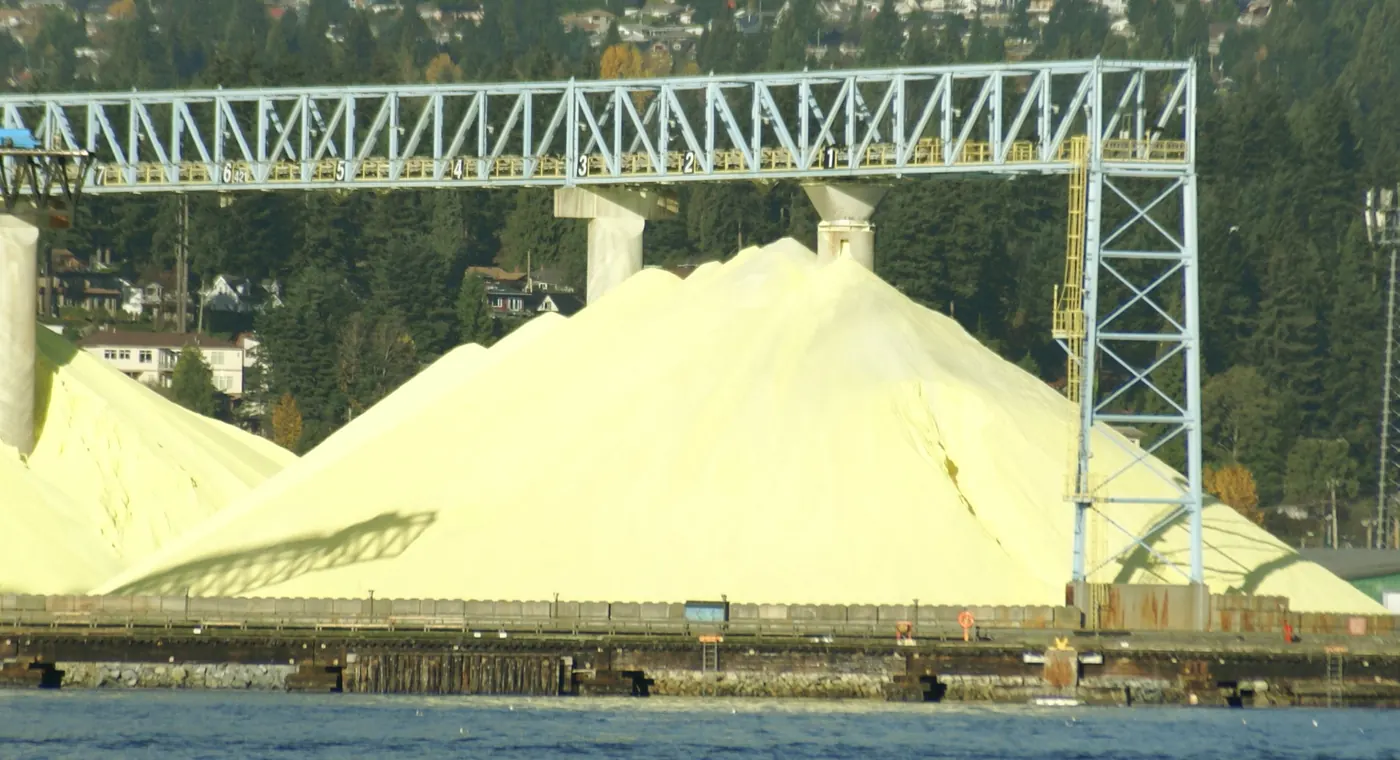
As of Wednesday, March 18, 2026, the global sulfur market has entered a critical "Inventory Exhaustion" phase. The closure of the Strait of Hormuz on February 28 has evolved from an initial shock into a structural shortage as industrial buffer stocks in China, Morocco, and Indonesia hit the 21-day danger mark.
Market snapshot (March 18, 2026)
The price gap between trapped Gulf supply and accessible international supply is at an all-time high.
- China Port Price (BAIINFO): 4,820 RMB/MT (~$700) — weekly trend ↑ 4.2%
- Hormuz Tanker Traffic: ~90% reduction — stagnant
- Global Sulfur Deficit: -5.1 million tons (est. 2026) — expanding
- Freight (Middle Corridor): $120 - $145 / MT — rising
Regional crisis reports
- China (The Spring Squeeze): Imported granular sulfur at Chinese ports is quoted at 4,820 RMB/MT. Port inventories have fallen below 1.7 million tons, threatening a total physical stock-out by early April. While domestic production is at 105% capacity, it only covers ~50% of national demand.
- Morocco (OCP): Despite commissioning a new TSP production line this month, OCP faces severe sulfur shortages. They have officially shifted procurement away from the UAE and Saudi Arabia toward Kazakhstan and Vancouver, paying "distress premiums" to secure Atlantic-basin cargo.
- The Middle East: Massive sulfur stocks are sitting at origin as producers cannot move product. Although negotiations are underway for "neutral" tankers to clear the Strait, insurers are still refusing to provide P&I cover, keeping ships at anchor.
Logistics: the Kazakh/Turkmen route
Supply from Kazakhstan and Turkmenistan currently holds the most envied position in the market. The "Middle Corridor" via Aktau and Baku is the only reliable large-scale supply line remaining. However, rail congestion at border gateways has increased transit times to 22 days.
Strategic summary
For a $16M cargo, the market value has likely appreciated by $1.2M since early March based on the BAIINFO index. Even if the Strait opens immediately, the backlog and production losses are expected to keep prices above $600/MT through the end of Q2 2026.