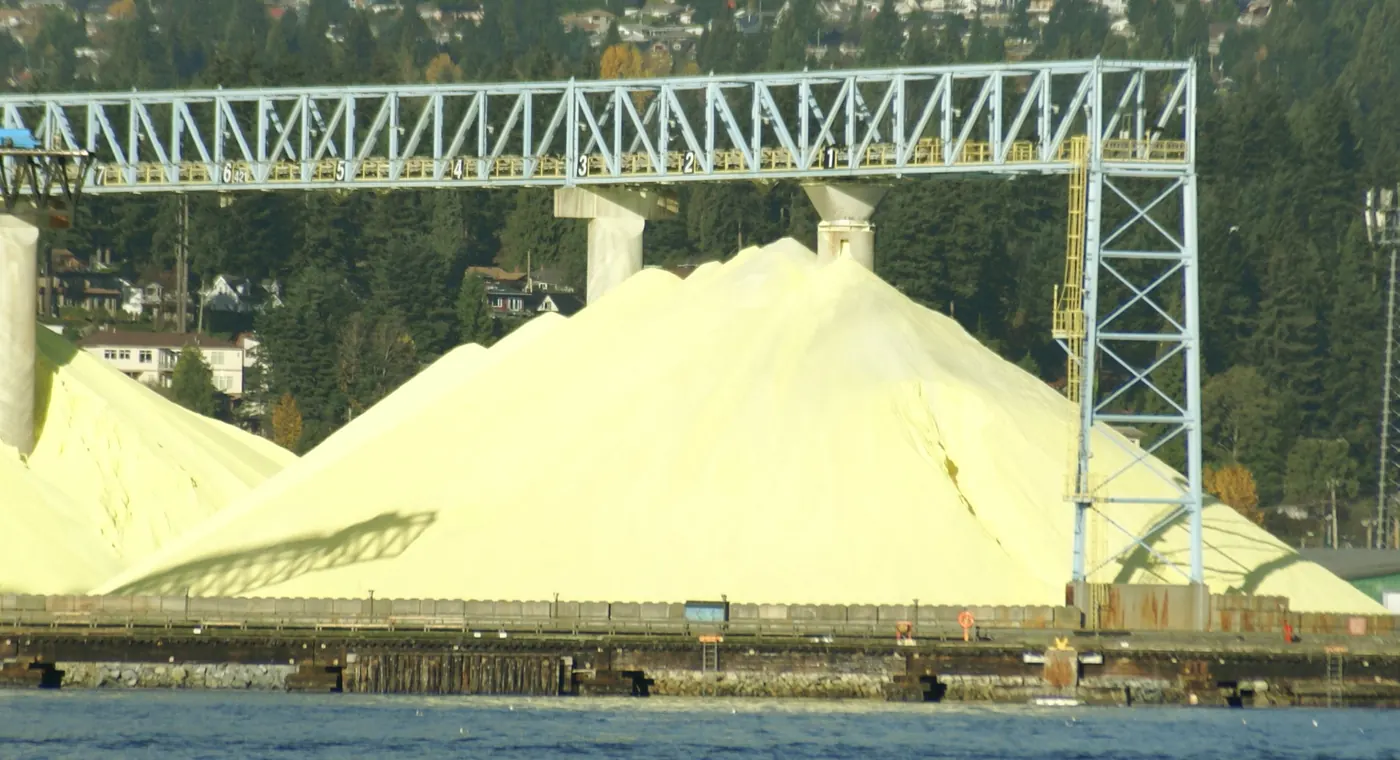
The global sulphur market during the week of June 11–18, 2026, operated under intense volatility due to US-Iran geopolitical tensions and logistically choked transit routes through the Strait of Hormuz. While international spot indices maintained their elevated plates, the Chinese domestic market witnessed a sharp correction, decoupling from the broader global trend.
A professional, market-focused analysis of the weekly performance and latest macroeconomic shifts reveals the following:
Chinese Domestic Market: Polarisation and Sharp Profit-Taking Following an extreme rally where domestic prices surged by over 160% to breach the 10,000 Yuan threshold, the Chinese local market entered a sharp correction phase mid-month.
Weekly Price Shift (Ex-Works China): Factory-gate assessments, which stood at 10,800–11,750 Yn/t on June 11, dropped to 9,400–9,600 Yn/t by June 18. This represents a steep decline of -1,775 Yn/t on a midpoint basis.
Refinery vs. Port Divergence: A rare polarization emerged in domestic trading. Local refineries in Shandong aggressively cut prices to clear accumulating liquid sulphur inventories. Conversely, solid sulphur prices at major ports experienced intraday spikes driven by bottom-fishing capital capitalising on the price dip.
International Spot Indices and Freight Resilience Despite the localized correction in China, global supply constraints triggered by geopolitical risks continue to provide a firm floor for international trade benchmarks.
Global Benchmarks: Spot ranges across Vancouver, the Middle East (FOB), and Brazil (CFR) remained completely flat week-on-week (nc). With Middle Eastern volumes facing persistent transit delays through the Strait of Hormuz, China's imported granular sulphur (CFR China) held its ground firmly at 1,050–1,100 $/t.
Freight Pacing (Sulphur Freight): Freight rates across major corridors, such as Vancouver-to-China (37–44 $/t) and Black Sea-to-Brazil (50–60 $/t), mirrored previous weekly levels. However, extended sailing times and heightened war-risk insurance premiums continue to prop up the global import cost baseline.
Downstream Pressures and Strategic Energy Shifts To accurately project market direction, two critical macroeconomic developments from energy and derivative sectors must be highlighted:
Aramco’s Strategic Infrastructure Move: Amid the Middle East crisis and soaring global demand for sulphur assets, Saudi Aramco is currently evaluating the sale of a stake in its sulphur infrastructure business, aiming to raise up to $7 billion. This highlights the growing role of sulphur supply management as a critical financial and geopolitical lever for national oil companies.
👇🏻👇🏻👇🏻