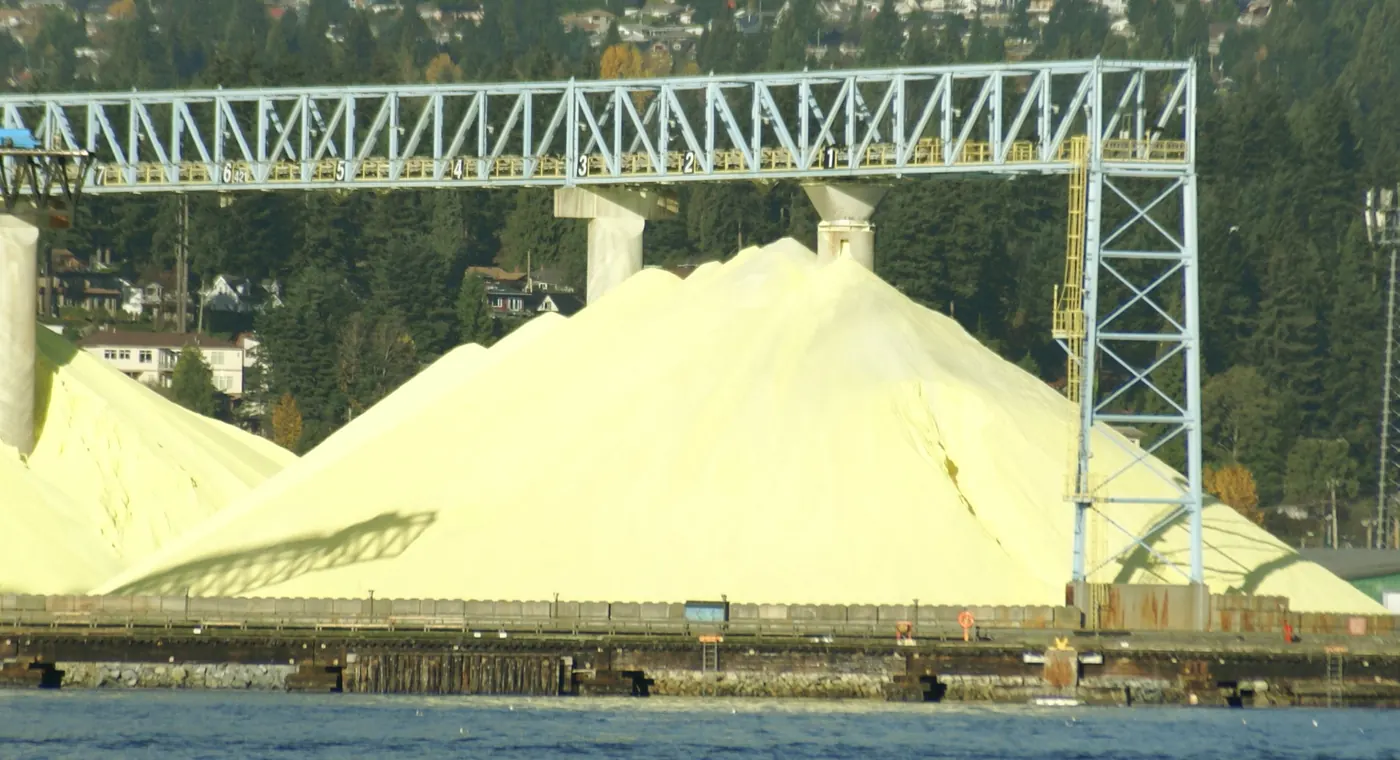
The Gulf producers have set their October contracts, and every one of them came down. Qatar at $835/t fob, down $45. Kuwait at $820/t, down $45. ADNOC at $890/t, down $70. In China, sulphur traded at about 7,390 yuan/t on Thursday, almost 11% lower than a month ago and well off the June peak.
It's tempting to read this as the market healing. I don't think it is.
Hormuz is still moving only a few cargoes a month, roughly a quarter of normal by one producer's estimate. Russia and Kazakhstan are still not exporting. Before the war, the Gulf supplied around 44% of the world's seaborne sulphur. That gap hasn't closed. What changed is the other side of the trade.
Phosphate plants are running at 50–60% of capacity worldwide. Buyers in China, India and Indonesia stopped chasing cargoes after the summer peak. Prices aren't falling because sulphur got easier to find. They're falling because fewer people can afford to burn it at $1,000 a tonne. That is demand destruction, not recovery, and those are two very different markets to plan around.
For anyone buying in the Mediterranean and North Africa, the lesson of this year is simple: the spot market will reward patience for a few weeks, then punish it the moment a single route closes again. Whoever has secured volume under contract is sleeping better today than whoever is waiting for the bottom.
We are seeing more enquiries for annual programmes than spot cargoes for the first time since spring. That tells you how buyers really read this market.