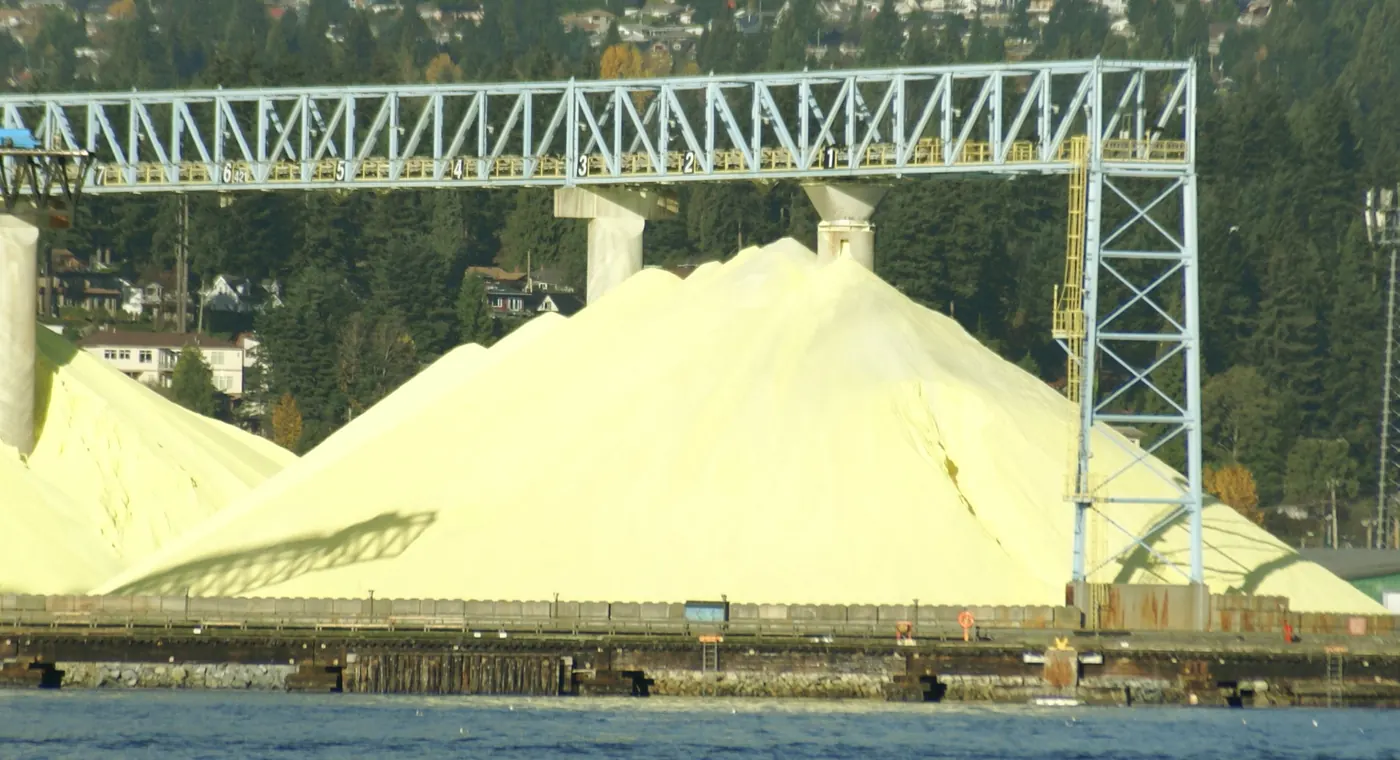
The global sulfur market has entered a clear bifurcation phase.
With ~20 million tons/year of seaborne sulfur effectively constrained behind the Strait of Hormuz, buyers are aggressively securing non-Middle Eastern supply at significant premiums. War-risk insurance withdrawals (effective March 5) have rendered Gulf CFR prices largely theoretical.
Current CFR Benchmarks• Vancouver → China/Indonesia: $540–565/MT (+$60 vs Feb)• US Gulf → Brazil (Santos): $535–555/MT (+$55 vs Feb)• Middle East → India/China: Suspended
Key Drivers
Freight dislocation: Bulkers rerouted from Qatar/UAE to North America.
Insurance exclusion: P&I clubs terminating Persian Gulf war-risk cover.
Transit time expansion: North America–Asia via Cape adds 40–50 days, materially increasing working capital exposure.
China IndicatorDomestic granular sulfur (Shandong) reached 4,250 RMB/MT (~$531/MT), confirming import parity above $530/MT for deliverable cargo.
Brazil Replenishment Timeline• Vancouver cargo (via Panama): ETA Santos March 22; Paranaguá March 26.• US Gulf cargo (Express Brazil): Southern Brazil ETA April 15–20.• March 10–25: Elevated supply gap risk in Brazil.
Freight & Cost Pressure• US Gulf → Brazil freight near WS 320 (~$72/MT), ~100% above January levels.• Vancouver → Santos freight +$20–30/MT vs last month.• Expected landed CFR Brazil: $535–550/MT (10–15% above pre-disruption baseline).
ConclusionThe US Gulf is now the primary relief valve for Brazil. Vancouver remains the only stable corridor for Asia. Pricing is no longer origin-driven but insurance and freight-driven.
Procurement and inventory decisions in March will determine Q2 cost structure exposure.