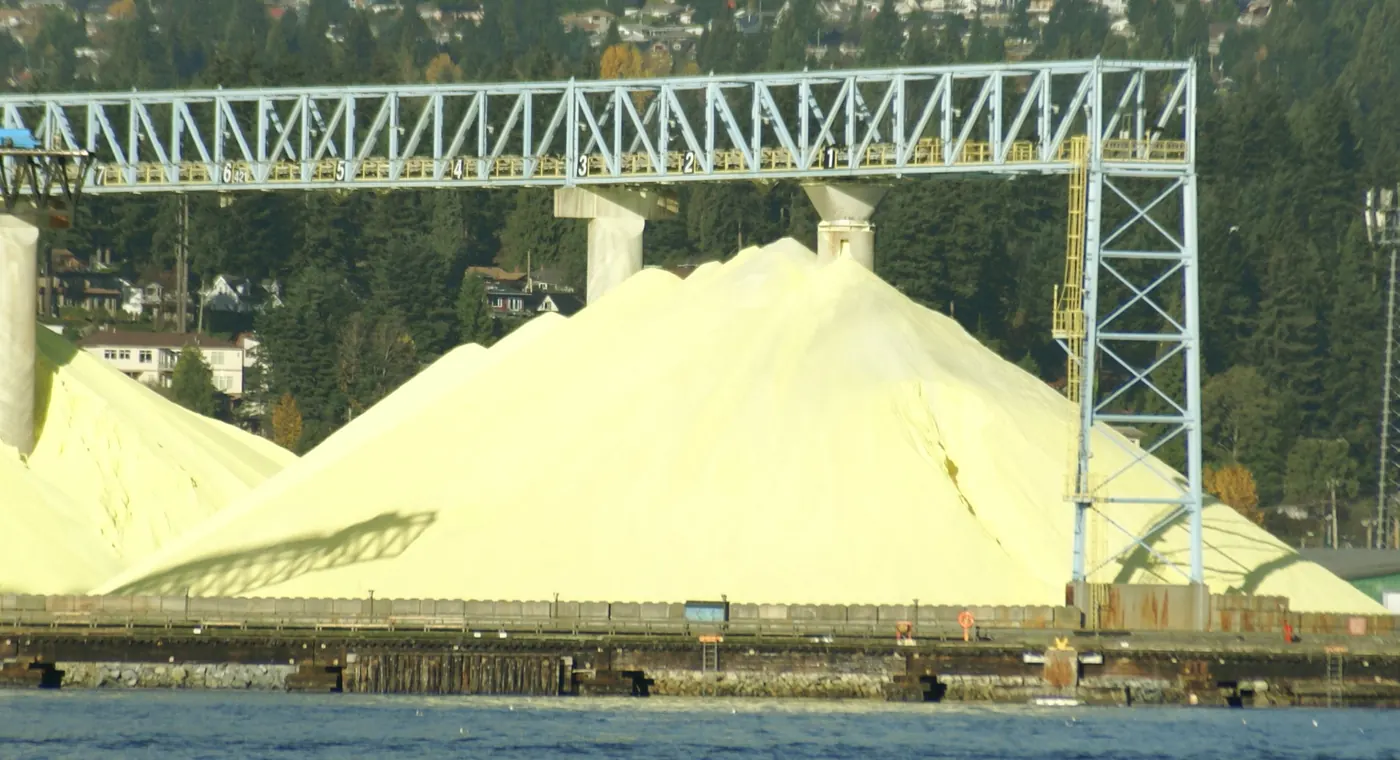
In commercial trade, elemental sulphur is classified by its total sulphur content, measured as a percentage of dry weight. The most commonly traded grades are 99.20%, 99.50%, 99.80%, 99.90% and 99.98% S. The differences look small on paper but are significant in practice: a specification calling for 99.50% minimum that accepts 99.20% material has taken on more ash, moisture and acidity than the process may tolerate.
Standard grades and their typical uses
The industry does not follow a single universal naming system. The same purity can be labelled fertilizer grade, technical grade or industrial grade depending on the region and supplier. What matters is the actual content figure.
- 99.20% S — fertilizer grade. The highest-volume traded form. Used in straight-to-soil sulphur applications, sulphuric acid production and as general-purpose industrial feedstock. Allows the widest moisture and ash tolerances.
- 99.50% S. A mid-range grade used in rubber vulcanisation, specialty chemicals and markets that require tighter purity without the premium of upper grades.
- 99.80–99.90% S. Required for pharmaceutical intermediates, food-contact applications and high-purity chemical synthesis. Ash and acidity limits are considerably stricter.
- 99.98% S — high-purity / bright-yellow grade. The purest commercially available form. Used in specialty and electronics-grade chemicals where trace metal content must be minimised.
Impurities that buyers must specify
Total sulphur content alone does not define quality. A complete specification also sets limits on:
- Moisture — typically 0.10–0.20% maximum for granular sulphur, lower for powders. High moisture affects delivered weight and can cause caking in bags during storage.
- Ash — inorganic non-combustible residue. Fertilizer-grade material generally allows up to 0.15% ash; high-purity grades require 0.02% or less.
- Acidity — expressed as H₂SO₄ equivalent, usually 0.02–0.05% maximum. Elevated acidity indicates oxidation during storage and accelerates bag degradation.
- Carbon — relevant for rubber and industrial uses. Carbon impurities can cause off-colour or out-of-specification vulcanised products.
Testing and certificates of analysis
Standard commercial practice requires an independent pre-shipment analysis conducted at the load port by a recognised inspection body such as SGS, Intertek or Bureau Veritas. The certificate of analysis (COA) confirms purity, moisture, ash and acidity against the agreed specification. Buyers should specify which test methods apply — ASTM D1385 for moisture, ASTM D1744 for acidity, or ISO equivalents — to prevent disputes when seller and buyer reference different standards.
Grade and physical form
The same 99.50% S purity is available as granular, mini-granular, micronized powder or liquid suspension. The grade describes the chemical composition; the form describes how the material is handled, applied and priced. When selecting a physical form, buyers should confirm that the desired purity grade is available in that form from their supplier and that the COA covers the relevant physical parameters as well as chemical ones.